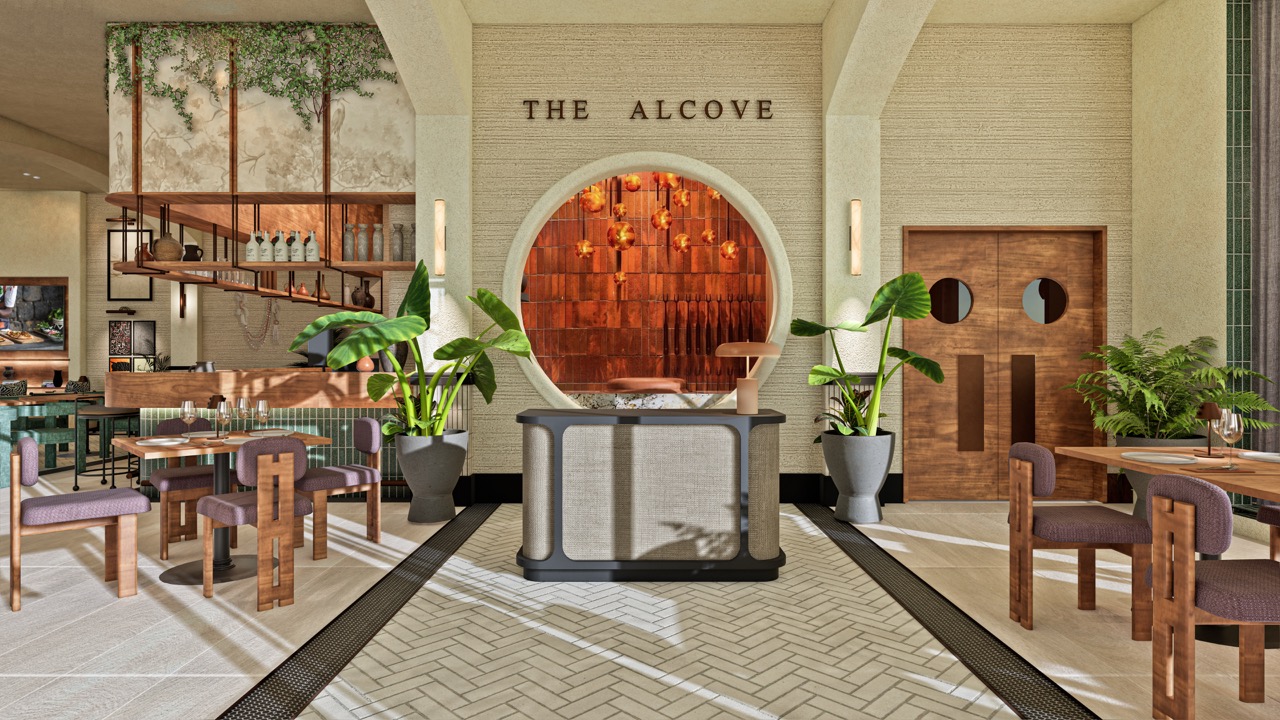

In hospitality design, the hostess counter is a pivotal anchor point that orchestrates both spatial flow and relational engagement. Positioned at the entry, it acts as the threshold where guests transition from the external environment into the curated world of the restaurant. The design of the counter is a deliberate exercise in balance—ergonomically scaled to facilitate interaction, crafted with high-quality materials like natural wood, stone, or brushed metal, and often anchored by task lighting that ensures visibility without glare. This precise combination of scale, materiality, and lighting creates a tactile and visual anchor that draws guests in.
Functionally, the hostess counter is a convergence of operational efficiency and human connection. The layout must enable clear sightlines, so the hostess can see approaching guests, facilitate smooth circulation, and efficiently assign seating. The host, stationed behind this counter, is a central node of relational architecture—through subtle verbal cues, attentive eye contact, and personalized engagement, they anchor the guest’s emotional connection to the space. By recalling a guest’s previous visit, offering a favorite table, or simply exuding warmth, the hostess transforms a logistical interaction into a personal narrative arc. This relational proximity is vital in a restaurant, where the first impression often predicts the trajectory of the entire dining experience. Over time, these micro-interactions foster loyalty, as guests feel seen, valued, and remembered. Thus, the hostess counter is not just a functional checkpoint; it is a dynamic nexus where design, hospitality, and human connection converge to define the guest relationship.