

There is a moment, just after checking in, when a guest begins to decide how a place will make them feel. It happens before they have unpacked or discovered the light switches. It happens in the journey from the entrance to the room, in the texture beneath their hand, the quality of the light and whether the space feels as though it belongs exactly where it stands.
By 2026, that moment has become increasingly important to luxury hospitality in South Africa. Across hotels, safari lodges and restaurants, luxury is moving away from visual excess and towards interiors that feel authentic, considered and deeply connected to their surroundings.
A Stronger Sense of Place
Perhaps the clearest shift is towards local identity. Travellers are increasingly seeking experiences that could not be replicated elsewhere, challenging designers to move beyond the international hotel aesthetic.
South African hospitality is responding through locally sourced materials, artisan craftsmanship, commissioned artwork and references to the landscapes and cultures that surround each property. Cape Grace in Cape Town, for example, draws on the city's history through its use of regional colour, pattern, botanical references and bespoke pieces. Canopy by Hilton Cape Town Longkloof similarly connects its interiors to the character of its neighbourhood through local art, South African prints and crafted furniture.
This approach is also changing how African identity is expressed. Rather than relying on obvious safari motifs or literal interpretations of African culture, contemporary hospitality is incorporating African influence through craftsmanship, artwork, material and narrative. The result is a more sophisticated expression of place that feels contemporary without losing its cultural connection.
Luxury Through Materiality
Material selection is following the same movement towards authenticity. Hospitality interiors are becoming warmer and more tactile, favouring materials that develop character rather than simply create an immediate visual impression.
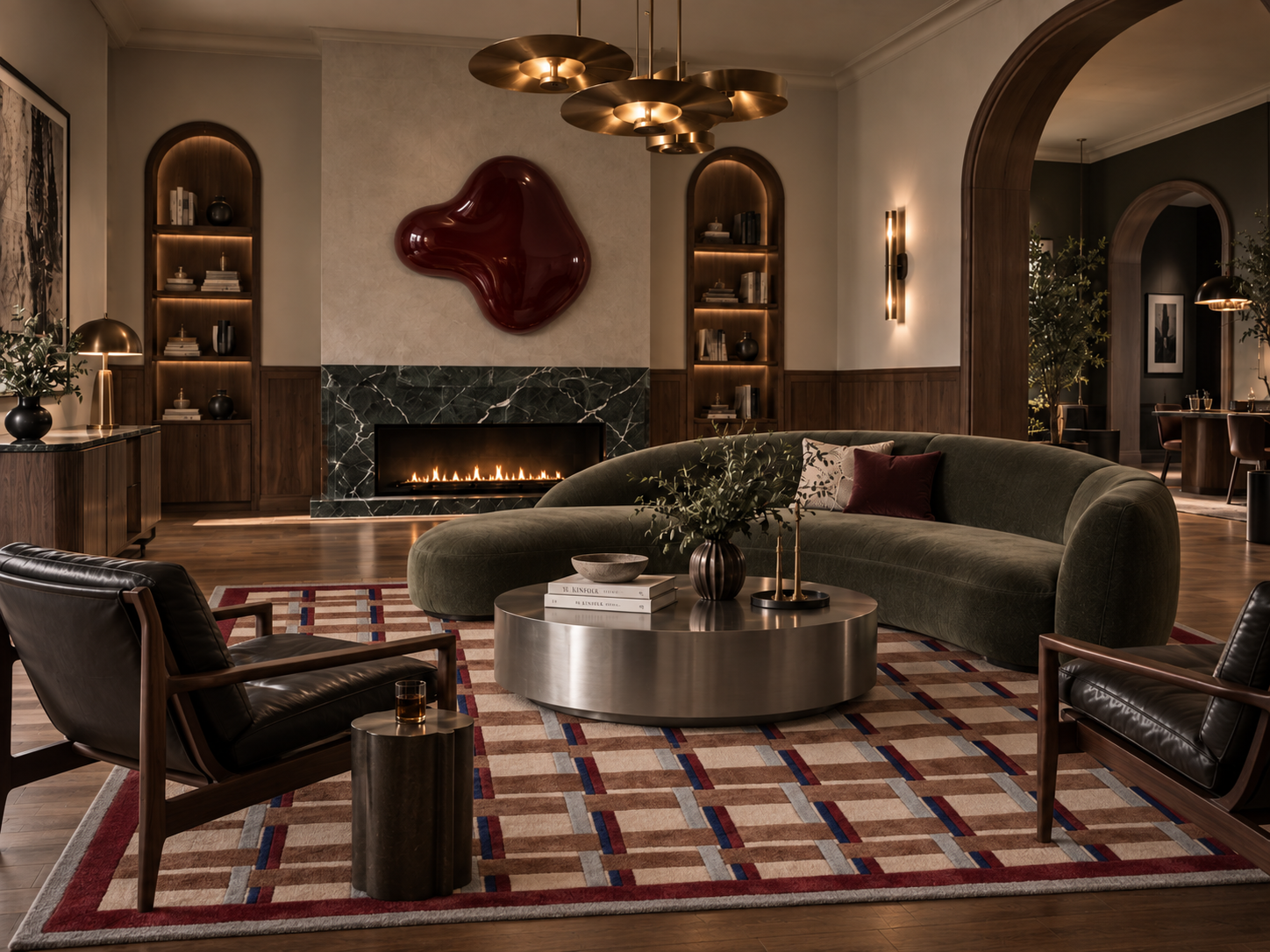
Natural stone, timber, leather, textured plaster, brushed metals and woven textiles are being layered to create depth and warmth. These materials also respond to the practical demands of hospitality, where durability needs to exist alongside comfort and beauty.
This is the evolution of minimalism. The stark, highly polished interiors associated with earlier interpretations of luxury are giving way to spaces where restraint comes from careful material selection rather than an absence of texture.
Designing the Complete Experience
The emphasis on experience is also changing the way hospitality spaces are designed.
Recent projects such as Marble Cape Town demonstrate a growing focus on sensory design, where acoustics, lighting, materials and spatial movement are considered as part of one experience. A restaurant can be visually striking, but if the acoustics make conversation difficult or the lighting is uncomfortable, the luxury quickly disappears.
Lighting has consequently become an important architectural tool. Sculptural fixtures and concealed sources can establish intimacy, highlight materials and guide guests through a space, while layered lighting allows restaurants, lounges and hotel interiors to transition naturally from day to evening.
The intention is not necessarily for guests to notice every design decision. The most successful hospitality spaces make these decisions feel effortless.
Interiors That Connect to Nature
South Africa's landscape remains one of its greatest design assets, and the boundary between interior and exterior continues to become more fluid.
Terraces, courtyards, outdoor lounges, large openings and framed views allow the landscape to become part of the guest experience. This is particularly powerful within safari lodges, where the environment is not simply a backdrop but a fundamental reason for being there.
The strongest designs do not compete with the landscape. They frame it, allowing natural light, vegetation, views and changing weather to influence the atmosphere of the interior.
Craft, Art and Individuality
Another defining shift is the growing importance of bespoke design. Custom furniture, locally commissioned artwork and individually designed joinery allow properties to establish an identity that cannot simply be reproduced from a catalogue.
At FYN, artwork inspired by the Cape's coastal environment forms part of the restaurant's broader narrative, while local craft and commissioned pieces contribute to the identity of newer Cape Town hospitality projects.
In a world where interiors can be photographed and replicated almost instantly, individuality has become a form of luxury. The provenance of an object and the story behind its creation can carry as much value as its appearance.
A More Distinctly South African Luxury
The most interesting development in South African hospitality is therefore not a single aesthetic trend. It is a change in what luxury represents.
The emphasis is shifting from what a space looks like to how it makes people feel. It is found in the quality of a material, the warmth of a carefully considered light, the sound within a restaurant, the view beyond a window and the story behind a piece of art.
The emphasis is shifting from what a space looks like to how it tells a story. It is found in the quality of a material, the warmth of a carefully considered art & furniture, the view beyond a window and the story behind a each choice.
For South African hotels, lodges and restaurants, the future of hospitality design lies in creating spaces that are authentic to their location, responsive to their guests and capable of ageing with grace.
The most successful interiors may ultimately be those that do not feel designed around a trend at all. They feel as though they could only exist in that particular place, for those particular people, at that particular moment.