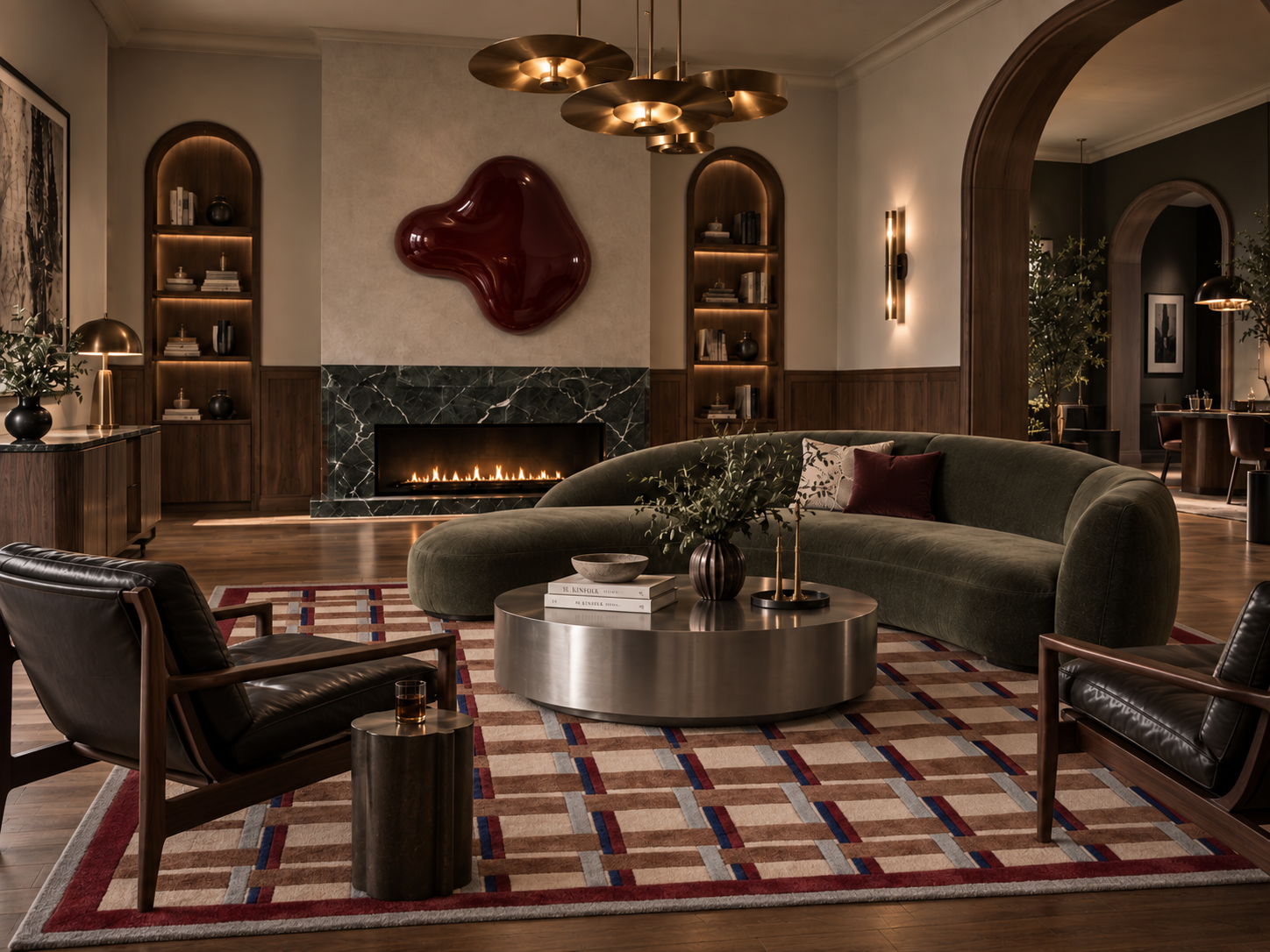

There is a particular kind of confusion that comes up in almost every first conversation with a new client. They will describe a room that isn't working, a kitchen that feels wrong, a home that never quite settled into itself, and they will ask for "a decorator" when what the project actually needs is a designer. The two words get used interchangeably so often that most people assume they mean the same thing. They don't, and the difference matters more than it seems.

An interior designer is involved long before anyone starts choosing cushions or paint colours. Their work begins with the bones of a space: how people move through it, how rooms connect to one another, how light falls across a kitchen counter at seven in the morning versus seven at night. A designer thinks about proportion and circulation and storage before a single finish is selected, often working alongside architects, engineers and contractors to make sure the structure itself supports the life that will be lived inside it. Space planning, interior architecture, lighting design, custom joinery, material selection, construction documentation, project coordination, and the final styling that pulls it all together — these all fall under one continuous process, from the earliest concept sketch through to the last cushion on the sofa.
An interior decorators work sits further downstream. Rather than reshaping a layout or solving how a space functions, a decorator works with what already exists and focuses on atmosphere: furniture, rugs, artwork, curtains, lighting fixtures, soft furnishings, colour. It is a valuable and distinct skill, but it stops at the surface. A decorator can transform how a room feels without ever touching a floor plan, a wall, or the underlying logic of how the space works.
So which one do you actually need? It comes down to the scope of what you're trying to solve. Building a new home, renovating an existing property, or reimagining a commercial or hospitality space all require the kind of planning and coordination only a designer can offer — these are projects where the end result has to work as well as it looks, not just photograph well. But if a space already functions the way you need it to and simply feels tired or outdated, a decorator can often bring it back to life through furniture, artwork and styling alone. It's a distinction many clients don't realise until partway through a project, when what started as "just a refresh" reveals that the real issue was always the layout, or the lighting, or a floor plan that never quite made sense.
This is really the heart of it: a beautifully furnished room doesn't automatically function well. Good interiors begin with planning, long before anything is decorated — working through proportion, circulation, lighting and storage so that the foundation is right before a single decorative decision is made. Designers are solving problems that are often invisible until they're fixed: where the light lands throughout the day, how furniture needs to be arranged to actually encourage conversation, how a family really moves through their own kitchen. Once that foundation is right, decoration has something real to enhance rather than something broken to disguise.
Bringing a designer in early, rather than after the fact, tends to save both time and money. It prevents the costly mistakes that come from decorating around a flawed layout, keeps communication with contractors clear from the outset, and ensures that every decision — structural or aesthetic — is working toward the same vision.