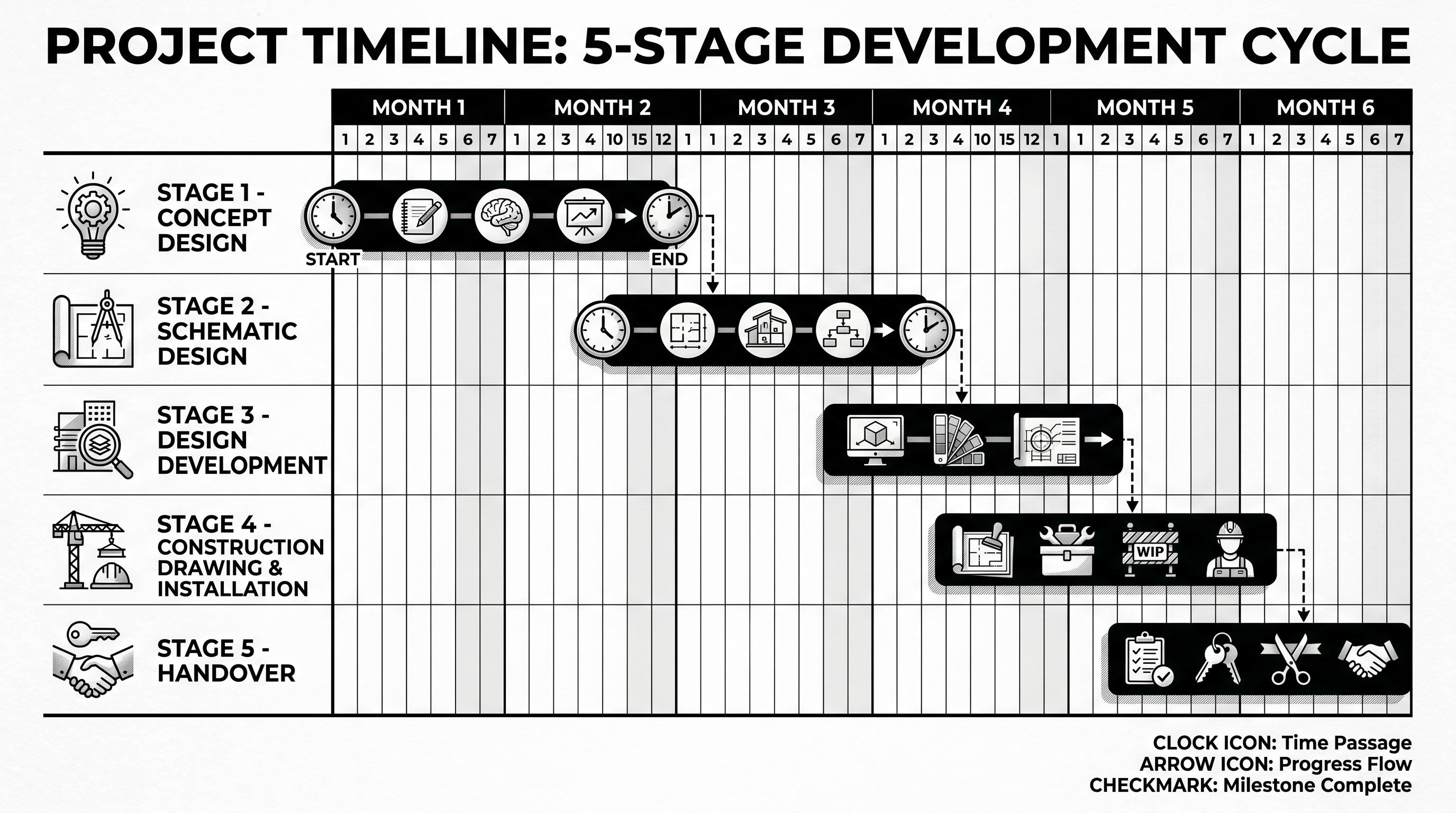

In interior design, the timeline of a project is a carefully orchestrated arc, each stage shaping the rhythm and momentum of the entire process. The first phase, conceptual design, forms the bedrock of the timeline. Here, designers immerse themselves in research, client aspirations, and inspirational cues. This early stage is fluid but crucial; it sets the aesthetic, thematic, and functional vision. While it’s often the shortest phase, its impact reverberates, as it anchors the project’s creative direction. In this phase, designers refine material choices, spatial layouts, and initial furnishings.
Following this is the design development stage, layouts are formalized, detailed sketches, and preliminary budgets emerge and early construction considerations surface. This phase is pivotal for aligning all stakeholders—clients, contractors, and consultants—on a concrete vision. The duration depends on the project’s complexity, but it is essential to balance creativity with feasibility.
After this, the timeline deepens in rigor during the construction drawing stage. Here, precise technical drawings—electrical plans, elevations, and construction specifications etc.—are produced. This stage is often the most time-intensive, requiring collaboration with engineers, contractors, and regulatory bodies. Once these drawings are finalized, procurement and installation occur as materials are ordered, tradespeople mobilize, and the space takes physical shape. Timelines must be tightly managed with regular site visits and milestone tracking to avoid delays.
The final handover is a celebratory culmination, but the timeline doesn’t end here; it is a point of reflection and feedback.
To effectively manage this timeline, organization and proactive communication are key. First, establish a detailed master schedule early on, incorporating buffer time between phases to mitigate risk. Assign specific tasks with clear deliverables and deadlines, and hold weekly or biweekly check-ins with the team. Digital project management tools keep everyone aligned, while regular client updates ensure transparency. Budget monitoring is equally critical; changes in scope or materials can ripple through the timeline, so financial checkpoints help keep adjustments in line. By balancing a methodical timeline with adaptive planning, designers ensure that each stage evolves on track, resulting in a cohesive, timely delivery that transforms a vision into a lasting reality.